





Around the UK’s coastline and inland waterways, independent lifeboat stations stand ready to launch. They are not part of the RNLI. Most are run by volunteers and rely on their own communities to keep going – donations, local fundraising and support from local businesses. The National Independent Lifeboat Association (NILA) estimates that, in 2024, its members attended 1,841 incidents and helped 2,014 people, according to the House of Commons Library.
The crews behind those numbers do demanding physical work in environments that change by the hour: tidal estuaries with strong currents and shifting sands, rivers and inland waterways, busy shipping channels and open sea.
Good risk management in this setting is not about removing risk. Rescue work carries risk by definition. It is about protecting the crew, the public, the boats and the organisation itself, so that the service can keep responding to call-outs.
This article uses the Rescue Boat Code and the relevant NILA insurance scheme conditions as its starting point, supported by HSE guidance for organisations that involve volunteers. At Hayes Parsons Insurance Brokers, we developed the specialist insurance scheme for NILA members in conjunction with the association. Our approach is simple. What matters most to a lifeboat charity is confidence: a broker and an insurer who genuinely understand the charity, with a wide policy wording at an affordable cost. The same principle underpins good risk management – it only works when it reflects what your organisation actually does.
The financial stakes are real. When MPs debated government support for independent lifeboats in Westminster Hall on 29 October 2025, the House heard that running the Ferryside lifeboat in Wales cost around £20,000 a year. The examples given for that station included roughly £289 a year to buy and maintain a crew member’s drysuit, lifejacket, locator beacon and flare, and £110 for a helmet on a five-year replacement cycle. The Rescue Boat Grant Fund that once helped with capital costs ended in 2020.
Why risk management matters for volunteer rescue organisations
Published by the Maritime and Coastguard Agency (MCA), the Rescue Boat Code is voluntary in general, but HM Coastguard requires compliance for declared rescue boat facilities within its scope. Adherence can also be a condition of insurance. The Code brings equipment, training, maintenance and operating procedures together. It requires organisations using it to undertake their own risk assessments. A station still needs to think about its own boat, crew and local waters, rather than assume that the Code has identified every risk for it.
The Code principally covers open rescue boats of less than 15 metres in length; flood-water and swift-water rescue boats are among its exclusions. This article focuses on operations within that scope. Other activities need their own assessment and confirmation of the standards and insurance conditions that apply.
The Health and Safety Executive’s guidance on volunteers remains useful, particularly for work ashore. Legal duties depend on how the organisation is structured and where it operates; Northern Ireland has its own framework, overseen by HSENI. Section 3.2.4 of the Code makes the rescue boat organisation responsible for the health and safety of anyone working on the boat, including volunteers.
What the HSE is careful to add is that health and safety should not be a barrier to volunteering. Risk assessments should be proportionate and focused on significant risks and practical precautions, not paperwork for its own sake. That message matters for organisations that depend on people giving their time.
Handled well, volunteer risk management helps a station keep crew and public safe, keep boats, engines and lifesaving equipment available and dependable, and avoid the downtime and cost that follow preventable incidents. It also helps show funders, trustees and insurers that the organisation is run responsibly. Above all, it helps the station keep launching.
The policy conditions in practice
For organisations insured under the NILA scheme, the policy conditions summarised here include:
- Adhering to the Rescue Boat Code or the ‘equivalent Police Tasking Authority’ referred to in the policy.
- Lifesaving training undertaken with the RNLI or a similar organisation.
- All volunteers holding at least RYA Powerboat Level 2.
- All skippers, helms and boat drivers being provided with personal protective equipment (PPE), which must be worn and signed for.
- Risk assessments being undertaken and kept up to date.
- Vessels being coded where legally required for the area in which they operate.
- Meeting the separate powerboat, kill cord and high-speed conditions.
These are minimum policy requirements, not a complete safety checklist or general rules of NILA membership. Read them alongside the Code and your full policy wording, schedule and endorsements. Clarify with your insurance adviser which volunteers the training conditions apply to, which training providers are accepted and what any Police Tasking Authority alternative requires.
The Code’s safety-management guidance includes documenting insurance cover and conditions. Volunteers also need to be covered by the policy. Five points are worth checking, and each is a risk management gap before it is an insurance gap:
- Assuming volunteers are automatically covered.
- Not insuring the full range of activities. Check that rescue operations, training exercises, open days and fundraising events have been disclosed and included in the agreed cover.
- Insufficient liability limits.
- Marine Liability being confused with ordinary Public Liability.
- Underinsurance.
The common thread is a mismatch between what the organisation actually does and what it has told anyone, including itself, that it does. Good risk assessment closes that gap.
Common operational risks for volunteer rescue organisations
Independent lifeboat stations face a mix of marine, operational, people and property risks that a generic charity template may not fully capture. Each station is different, but the following areas are likely to feature on most. The Code provides the framework; local assessments put it into practice.
Launching and recovering the boat
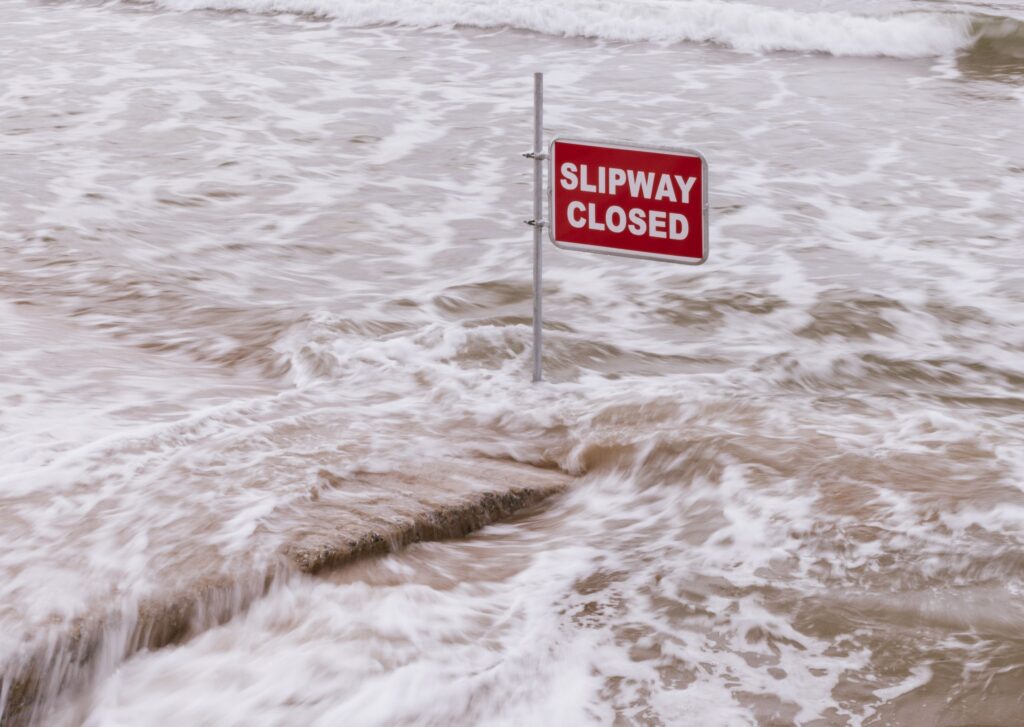
Launch and recovery can involve vehicles, trailers, winches, slipways, moving water and people working close to the boat under time pressure, often at night. The assessment should cover who is authorised to launch, how the activity is directed, the state of the slipway or beach, how the shore crew and boat crew communicate, and what happens if a winch, tractor or trailer fails part-way through. Procedures need to be familiar enough to follow confidently at 3am. Under the Code, once the Launching Authority has authorised a launch, the helm has the final decision whether to proceed.
Working on and near the water
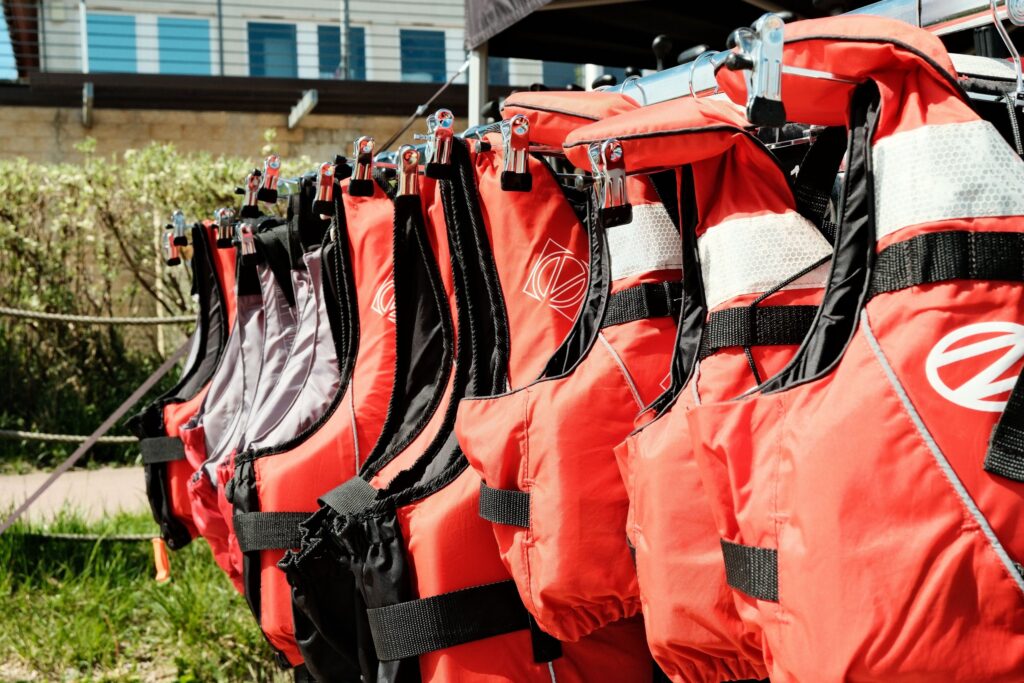
Immersion, cold-water shock, slips on wet surfaces and rapidly changing sea states are risks to consider during shouts, training and work on or near the water. Appropriate lifejackets and protective clothing are important, but equipment on its own is not enough. Volunteer safety also depends on training, supervision, working communications and every person knowing their role and its limits.
The PPE condition makes provision, use and signed issue records part of that routine. The Code also calls for serviceability checks after use or at the start of each shift, dedicated storage and arrangements to stop defective PPE being picked up by mistake. Shore crew PPE should be determined by a local risk assessment.
Training and competence
The policy’s training conditions are a starting point, not the whole job. The Code requires a nominated Training Manager and up-to-date training records and certification. Training should reflect the boat, local waters and the work people will actually do, including launch and recovery, communications and emergencies. Appendix 2 sets out additional helmsman competencies for night-time and offshore operations. Powerboat Level 2 alone does not meet all of those requirements.
Severe and changing weather
A familiar stretch of water can look very different from one call-out to the next. The Code requires operating procedures to state limits that take account of the boat, equipment, crew training and weather. The station’s own service records can also help identify changes in the type of incidents it attends. When the pattern of call-outs changes, the risk assessment should change with it.
Powerboat operation, kill cords and speed
Boat handling needs to reflect local traffic, visibility, sea conditions and the safety of crew and survivors. Section 7.2.1 of the Code generally recommends kill cords but makes their use optional for rescue boat operations, with a local risk assessment required to determine their use. Read the policy’s powerboat, kill cord and high-speed conditions in full and build them into procedures and helm briefings. The Code’s flexibility is not permission to depart from an insurance condition; clarify any conflict with your insurance adviser before operating.
Manual handling
Crews lift fuel cans, drag boats, haul ropes and move trailers, often on wet, uneven or moving surfaces. The Code calls for boat design and rescue procedures that minimise manual-handling risks, particularly when recovering survivors. Training and local assessments should cover those tasks as well as routine work ashore. Volunteers should feel able to stop and reassess when the task turns out heavier or more awkward than expected.
Maintaining rescue vessels and equipment
Boats, engines, launch vehicles, radios, lifejackets and medical kit must work first time. A maintenance regime should set out what gets inspected, how often, by whom, how defects are reported, when equipment is taken out of service and how all of that is recorded. Maintenance is also a time when a volunteer may be working alone at the station, and the HSE lists lone working among the higher-risk volunteer activities that a risk assessment should cover.
Follow the Code’s maintenance and examination arrangements, with the Responsible Person keeping the compliance checklist, examination records and certificates current. The maintenance schedule should reflect manufacturers’ recommendations and local operating needs. This sits alongside the policy requirement for vessels to be coded where legally required.
Fundraising events and community open days
Open days and fundraising events are essential to independent stations, but they bring the public into operational spaces. Visitors near slipways and moving vehicles, children around equipment, temporary structures, food, demonstrations and cash handling all sit outside the day-to-day rescue risk profile. The HSE publishes separate guidance on charity retail and fundraising activities, and these activities should be shared with the organisation’s insurance adviser so the policy reflects them.
Boat trips need particular care. Before carrying visitors, check the Code’s passenger-carriage provisions, carry out the required specific risk assessment and confirm the insurance arrangements.
Risk assessments in practice
The Code’s approach is to assess the whole operation: road transport where relevant, launch, on-water activity and recovery. Appendix 3 gives an example method, but allows other recognised systems. The value is in doing it honestly for the station as it actually operates, not in the template.
HSE’s five-step approach remains a useful practical aid: identify hazards, assess the risks – including who might be harmed and how – control the risks, record the significant findings, and review and update the assessment as necessary.
A useful assessment for an independent lifeboat station will:
- Include volunteers as people at risk and as contributors. The HSE describes health and safety as a two-way process in which volunteers can raise concerns and influence decisions. In rescue organisations, the crew know things about the slipway, the boat and the local water that trustees and station officers may not.
- Stay practical. Concentrate on the hazards that could seriously hurt someone or take the boat off service. A four-page assessment that the crew have read beats a forty-page one that nobody has, provided it covers the relevant risks and Code requirements.
- Be reviewed on triggers as well as on a schedule. A new boat, a new launch method, a change of venue for training, a run of paddleboard rescues that did not use to happen, or a near miss should all prompt a look.
- Draw on near misses. An incident that came close to going wrong is data about the station’s real risk profile. It belongs in the next review.
- Lead to action. Record the controls, who is responsible and how they feed into procedures, training and maintenance. Keep the assessments and compliance checklist up to date.
The aim is not to anticipate every scenario. It is to give volunteers a clear, shared framework for making safe decisions when the conditions are not the ones anyone planned for.
Recording incidents and learning from them
Accidents, damage and near misses should be recorded promptly and reviewed properly. Just as important is a culture in which volunteers report near misses without fear of blame.
Our view is simple: near misses are early warning signs and an opportunity to learn. They also matter from an insurance standpoint. Report incidents and circumstances in line with the policy’s notification requirements, including where an incident could later evolve into a claim.
After an incident, record what happened, who was involved, what the organisation was doing and what has been learned. Keep established facts separate from assumptions about the cause, and provide the information requested by the insurer. A station that has recorded those things as a matter of routine is in a far better position than one reconstructing events weeks later.
Not every incident has to be reported under RIDDOR, and marine reporting requirements need separate consideration. Check the Marine Accident Investigation Branch’s MGN 564 (M+F) Amendment 2, updated in June 2026 to reflect the Merchant Shipping (Accident Reporting and Investigation) Regulations 2026. Where a marine casualty or incident is reportable, notify the MAIB as soon as practicable without waiting for an internal investigation. Check the rules that apply to your activities and location, including Northern Ireland’s framework where relevant. An internal incident record or notification to an insurer does not replace a required report to the relevant authority.
Alongside any required reporting, the useful part is the review. Lessons should flow back into procedures, training, equipment and the risk assessment, so that the same thing is less likely to happen twice.
Where insurance fits within a wider risk management strategy
Insurance does not remove operational risk, and it is no substitute for good planning, training and maintenance. What it does is support the organisation financially when an unexpected insured event happens despite all of that.
An independent lifeboat station’s needs go beyond a standard charity policy. If a station employs staff, Employers’ Liability insurance is a legal requirement unless an exemption applies. The core covers to consider are:
- Employers’ Liability, for the organisation’s legal liability for work-related injury or illness, with the wording checked to ensure volunteers are included;
- Public Liability, for legal liability for injury to third parties or damage to their property in connection with insured rescue operations, training or events, with marine liability addressed explicitly rather than assumed;
- Cover for owned or hired equipment, including but not limited to vessels and lifesaving equipment.
Where the station owns or is responsible for its premises, buildings cover will also need to be considered.
Beyond those, we would also recommend that independent rescue organisations consider Trustees’ Indemnity, Personal Accident cover for crew, and Cyber Liability.
The detail of the wording matters as much as the headline cover. Definitions, limits, exclusions and conditions vary. This is where the five checks described earlier matter: volunteers who are not included, activities outside the agreed cover, inadequate liability limits, marine and public liability confused, and vessel sums insured that have not been reviewed.
The Code includes documenting insurance cover and conditions within the safety-management system. Keep the policy wording and endorsements accessible to the people responsible for training, PPE, maintenance and launch decisions.
When to review. Our advice is to start the renewal conversation well before the policy expires and agree the timetable with your insurance adviser. That leaves time to work through what has changed and gather the information the insurer needs. A review also makes sense whenever the station acquires or disposes of a boat, buys significant new equipment, changes its premises, takes on new activities, has a major incident or changes how volunteers are deployed. Changes that need to be notified under the policy should not wait until renewal.
This comes back to where this article began: confidence in a broker and an insurer who genuinely understand the charity, backed by a wide policy wording at an affordable cost. Finding that combination is, in our view, of the utmost importance.
Keeping independent lifeboats launching
For independent lifeboat stations, risk management is not a document. It is an ongoing habit, grounded in the Rescue Boat Code and the relevant policy conditions: practical assessments that reflect how the station really works, volunteers who are involved and trained, kit that is maintained and stored properly, incidents and near misses that are recorded and learned from, and insurance that matches the full picture. Each of those supports the others, and together they help keep crews safe and boats ready.
If your organisation is a NILA member, you can find out more about the specialist insurance scheme we have developed with NILA, or get in touch with our marine team on 0117 929 9381 to talk through the risks, activities and assets your station needs to consider.